
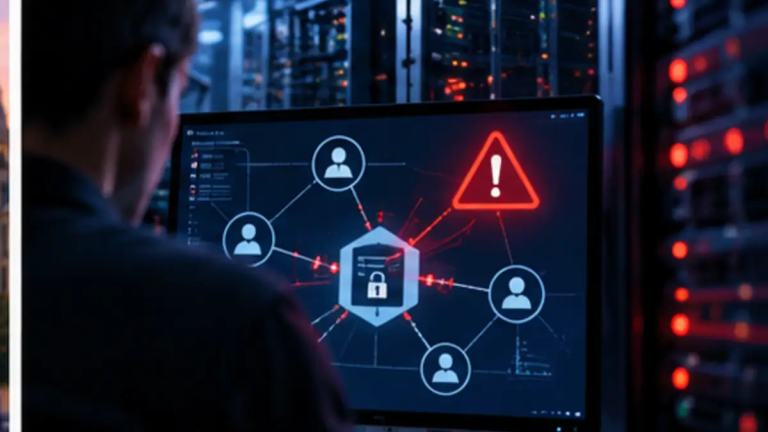

Artificial intelligence is moving quickly into cybersecurity operations, and one question appears again and again: can AI replace a traditional Security Operations Center?
Not yet. But it can already change how a SOC works.
Security teams face a familiar problem: too many signals, too many products and too little time. Endpoint alerts, Microsoft 365 events, identity logs, cloud activity, threat intelligence and external exposure data often live in different systems. The challenge is no longer collecting information. It is deciding what deserves attention.
Where AI helps today
AI is particularly useful when the task involves summarizing, correlating and prioritizing large amounts of security data. It can help identify patterns across separate events, explain technical findings in plain language and surface unusual behavior that may deserve human review.
For smaller security teams, this can be significant. A managed service can use automation and AI to reduce repetitive analysis and focus human attention on the incidents that carry the most risk.
Why human judgment still matters
Security decisions have consequences. Blocking a user, revoking access, resetting credentials or isolating a device can interrupt business operations. An AI model may understand the technical pattern but still lack the business context needed to decide whether an action is appropriate.
This is why the near-term model is likely to be AI-assisted security operations rather than fully autonomous defense.
Systems can detect, summarize and recommend. Human operators can validate the context and approve high-impact actions. Over time, organizations may choose to automate specific low-risk responses while keeping sensitive decisions approval-gated.
From dashboards to operational intelligence
This direction is also shaping products such as MCS – Managed Cyber Security, developed by Israeli IT and cybersecurity provider M-Challenge, led by Ariel Marom, Founder & CEO.
The platform is designed to bring security signals from multiple sources into a managed operational view. The longer-term opportunity is not simply to show more alerts, but to let AI help explain what happened, identify relationships between events and recommend the next security action.
For example, a suspicious geographic login may be relatively low risk on its own. Repeated password failures followed by a successful login from an unusual location, combined with an endpoint alert, tell a very different story. Correlation is where AI can create real operational value.
The SOC is evolving, not disappearing
AI will probably remove a large amount of repetitive security work. It may also make advanced monitoring economically viable for organizations that could never justify a large internal SOC.
But accountability, business context and response decisions still matter. The strongest model is likely to combine automation, AI analysis and experienced human operators.
The question, therefore, is not whether AI will replace the SOC. It is how quickly security teams will redesign the SOC around AI.
